
The interview ends, you shake hands, you say something like “looking forward to hearing from you,” and then… nothing. No email. No call. Just a blinking phone screen and a growing list of theories about what went wrong.
Here’s what’s actually happening on the other side of that silence: nothing personal, and nothing mysterious.
At CarGuys Inc., we sit in on hiring conversations across dealerships and repair shops nationwide, and the post-interview process looks remarkably similar from store to store.
Knowing what happens in that room changes how you wait, how you follow up, and how you read the signals that actually matter.
What Actually Happens in the Debrief Room
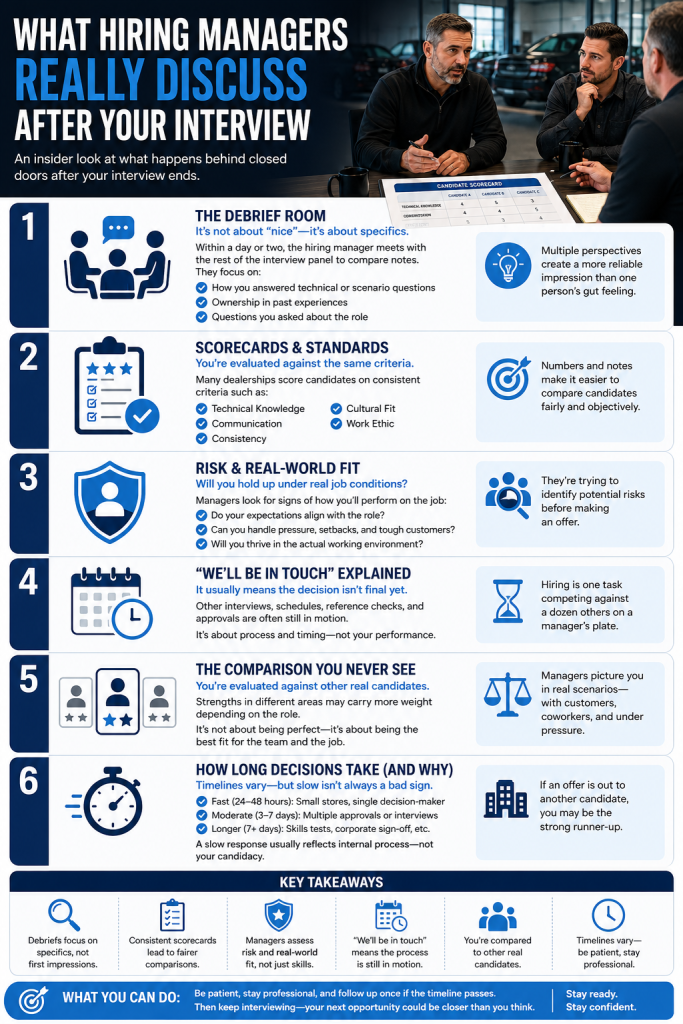
Most dealerships don’t make hiring decisions on the spot, even when the interview goes well. Within a day or two, the hiring manager typically sits down with whoever else sat in on your interview: a service director, a GM, sometimes a lead technician or top salesperson pulled in to gauge fit. That conversation is rarely about whether you seemed “nice.” It’s about specifics.
Did you answer the technical or scenario-based questions the way someone with real experience would? Did your explanation of a past comeback, a difficult customer, or a missed deadline show ownership instead of blame? Did you ask questions that suggested you understood the role, not just the paycheck? Hiring teams compare notes on these details because a single interviewer’s gut feeling is unreliable. Two or three people cross-checking the same impression is not.
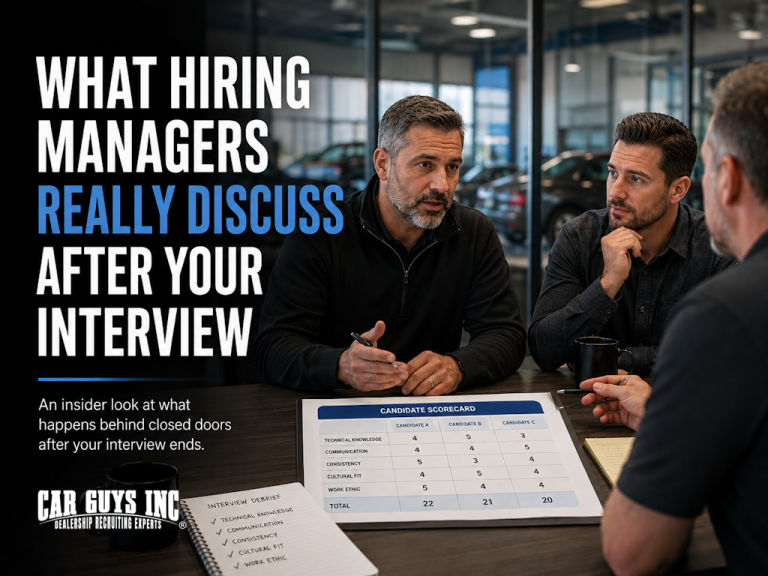
This is also where a candidate rating system often comes into play. Many dealerships now score candidates against the same criteria: consistency, communication, technical knowledge, and cultural fit; so the debrief becomes a comparison of numbers and notes rather than a vague “who did we like better.” If you’re curious what that process looks like from the hiring side, it’s worth understanding how these conversations get structured before you walk into your next one.
Managers are also weighing something you can’t fully control in the moment: whether you’d hold up under the job’s actual working conditions. A technician candidate who nailed the diagnostic questions but seemed uneasy talking about flat-rate pay might raise a flag about expectations down the road. A sales candidate who impressed on charisma but dodged questions about handling rejection might get a second look on resilience. None of this shows up on a scorecard as “personality”; it shows up as specific, job-relevant risk the team is trying to price in before making an offer.
Why “We’ll Be In Touch” Doesn’t Mean What You Think
Candidates tend to hear “we’ll be in touch” as either a soft no or a promise of an imminent offer. In reality, it usually means exactly what it says: the decision isn’t final yet, and other steps are still in motion.
Dealerships juggle interview schedules that rarely line up. The GM interviewing candidates for a sales floor opening might be out for two days. A service manager may be waiting to interview one more technician before comparing all three. A background check or reference call might still be pending. None of this reflects your performance; it reflects the reality that hiring is one task competing against a dozen others on a manager’s plate.
If you want to understand why the wait itself creates so much anxiety, and why silence gets misread as rejection more often than it should, it helps to see the pattern from the other side of the process.
The Scorecards and Comparisons You Never See
Here’s the part most candidates never consider: you’re not just being evaluated against an ideal candidate in the hiring manager’s head. You’re being evaluated against the other real people who interviewed for the same role.
That comparison isn’t always fair in the way you’d expect. A candidate with slightly weaker technical answers but stronger communication skills might edge out someone more experienced but harder to read. A service advisor candidate who handled a mock “angry customer” scenario calmly might beat a candidate with more years on paper. This is why the specifics of how you communicate carry so much weight; hiring managers are picturing you in front of customers, coworkers, and difficult moments, not just reading your resume.
If your resume got you in the door in the first place, know that hiring teams are also mentally replaying what stood out about it and checking whether the person in the room matched the person on paper.
How Long Decisions Really Take (and Why)
There’s no universal timeline, but there are patterns. Single-location dealerships with one decision-maker often move fast, sometimes within 48 hours. Larger dealer groups with multiple layers of approval, or roles that require corporate sign-off on pay plans, tend to take a week or more. Technical roles with working interviews or skills assessments add extra days by design.
The uncomfortable truth is that a slow response usually says more about internal process than about your candidacy. That doesn’t make the wait less frustrating, but it does mean you shouldn’t read a week of silence as a verdict. If you’ve gone through this before and never got a clear answer on why, the pattern behind unanswered applications and interviews is more structural than personal, and understanding it can change how you handle the next one.
There’s one exception worth knowing: if a store has already made an offer to another candidate and you were the strong runner-up, many hiring managers intentionally hold off on a rejection until the first choice formally accepts. It feels like being ignored, but it’s often the manager keeping a backup plan alive in case the paperwork falls through, not a sign you were dismissed.
What You Can Control After the Interview Ends
You can’t sit in on the debrief, but you’re not powerless once you walk out of that interview. A short, specific thank-you email within 24 hours, referencing something you discussed, keeps you top of mind while the comparison is still happening. If you said you’d follow up by a certain date, do it; it signals the same follow-through a hiring manager wants to see on the job.
It’s also worth being honest with yourself about how the conversation went. Which questions did you answer with confidence, and which ones did you stumble through? That reflection matters whether or not this particular role comes through, because the next interview is rarely far behind.
If a week or more passes with no update, a brief, polite check-in is appropriate and often welcomed; hiring managers are juggling schedules, not testing your patience. One short email restating your interest and asking for a timeline is enough. Repeated calls or messages in that same window tend to work against you, since they read as pressure rather than genuine interest.
Waiting Doesn’t Mean Waiting Idle
The best move after an interview isn’t refreshing your inbox. It’s staying in motion. Keep interviewing elsewhere if other opportunities are moving. Keep sharpening how you talk about your experience. And if you do land the offer, know that the evaluation doesn’t stop at hiring; the first 90 days matter just as much as the interview that got you there.
The silence after an interview feels loaded because you only see one side of it. Once you understand what’s happening on the other side, the wait gets a lot easier to sit with.
CarGuys Inc. connects skilled automotive professionals with dealerships and repair shops nationwide through intelligent matching technology. Instead of flooding candidates with irrelevant openings, we focus on fit, timing, and transparency.


Upload your resume once, and when a matching opportunity arises, you will be notified. No noise. No pressure. Just the right opportunity at the right time.