
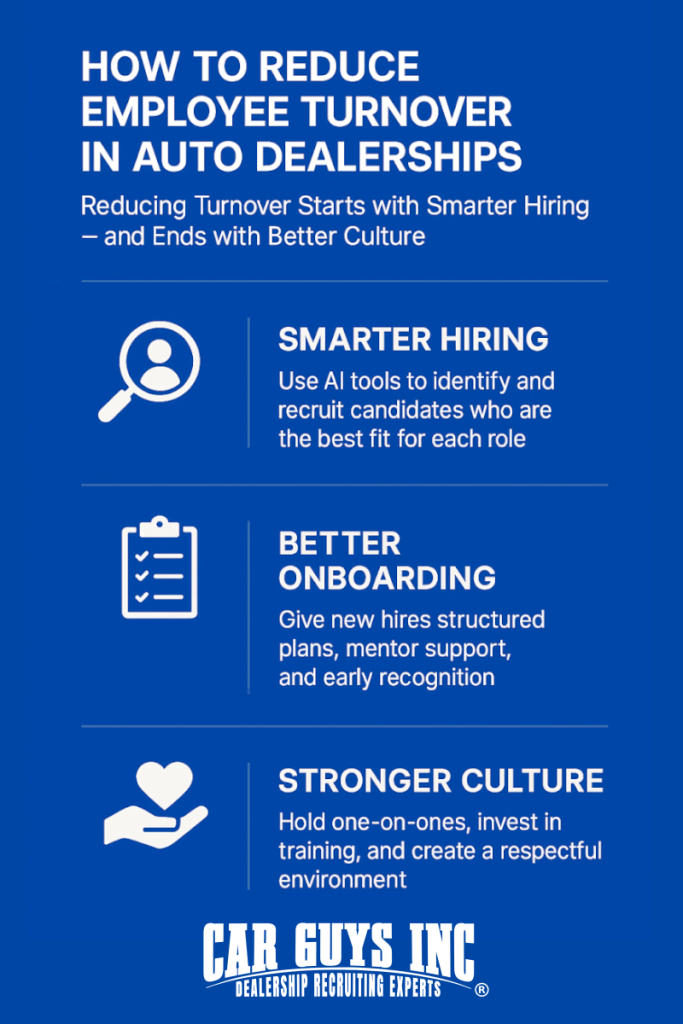
Reducing Turnover Starts with Smarter Hiring and Ends with Better Culture
Turnover in automotive dealerships isn’t a new problem – but it remains one of the most expensive ones. The average dealership loses between 40% and 67% of its workforce annually, a rate that quietly drains revenue, disrupts customer relationships, and erodes the culture that drives long-term performance. And yet, most dealerships treat it as a cost of doing business rather than a problem worth solving with precision.
At CarGuys Inc., we work exclusively in the automotive staffing space, and we’ve seen firsthand how the right approach to hiring, onboarding, and culture can fundamentally change a dealership’s retention numbers. This post breaks down what actually works – and what most dealerships are still getting wrong.
The Real Cost of Employee Turnover in Auto Dealerships
Most dealership leaders understand that turnover is expensive, but few have sat down to calculate the actual number. Research across industries consistently shows that replacing a trained employee costs between 50% and 150% of their annual salary, including recruiting, lost productivity, training time, and the drag on team morale.
In fixed operations alone, an open technician bay can cost a dealership more than $1,200 per day in lost labor revenue. In sales, turnover means broken customer relationships and missed referrals – the kind of attrition that takes months to rebuild. In F&I and management, every departure creates ripple effects that reach every corner of the store.
The harder truth: most of that turnover is preventable. It doesn’t begin when an employee walks out the door. It begins in the first 90 days – and sometimes before the hire is even made.
Calculate the cost of technician turnover.
Smarter Hiring Is the First Step Toward Dealership Employee Retention
Speed is the enemy of fit. When a service bay sits empty or a sales desk goes unstaffed, the pressure to hire fast overrides the discipline to hire right. The result is a revolving door that costs far more than the original vacancy.
Dealerships that consistently reduce employee turnover share one trait: they have a defined hiring process that evaluates more than a resume. They screen for role compatibility, cultural alignment, and long-term intent. They know that a high-volume flat-rate tech and a customer-facing service advisor require fundamentally different personalities – and they don’t treat them as interchangeable.
Practical improvements to the hiring process include:
- Structured interviews that go beyond work history to assess motivation and fit
- Consistent candidate communication so top applicants don’t drop off mid-process
- Reference checks focused on retention patterns, not just performance ratings.
- Realistic job previews that set accurate expectations before day one
When candidates know what they’re walking into – the culture, the expectations, the pace – they’re far less likely to leave within the first six months. Transparency at the front end is one of the simplest and most overlooked retention tools available.
Onboarding Is Where Automotive Staff Turnover Is Won or Lost
A strong hire can have a short tenure if their first two weeks feel disorganized, unwelcoming, or unclear. Onboarding isn’t paperwork – it’s the bridge between recruitment and retention. Done well, it accelerates performance and builds the kind of early loyalty that keeps people around for years.
Effective onboarding in dealerships should accomplish three things:
- Set expectations clearly. A 30-60-90-day plan that outlines goals, support structures, and milestones removes ambiguity and provides new hires with a framework for success. When people know what’s expected, they’re less likely to feel lost – and less likely to leave.
- Connect them to the team. Peer mentorship helps both technicians and advisors integrate faster. Assigning a go-to person for questions reduces the anxiety of being new and accelerates the sense of belonging that drives long-term commitment.
- Recognize early progress. Acknowledging wins in the first 30 days – even small ones – signals to new employees that their contributions are seen. That simple act of recognition does more for retention than most managers realize.
Build a Culture That Makes Technician Retention Strategies Unnecessary
The dealerships with the lowest turnover rates aren’t always the ones paying the most. They’re the ones where people feel respected, heard, and invested in. Culture isn’t a perks package or a Friday pizza lunch – it’s the daily experience of working somewhere that takes its people seriously.
Most technicians and advisors who leave don’t do so solely because of pay. Exit interviews consistently reveal a different story: they felt ignored, undervalued, or stuck. Compensation matters, but it rarely saves a bad culture. It only delays the departure.
Creating a retention-friendly culture doesn’t require a budget overhaul. It requires consistency in how managers communicate, how effort is recognized, and how the work environment reflects the values the dealership claims to hold. Specific practices that move the needle include:
- Regular one-on-ones between managers and team members that address workload, career goals, and any emerging frustrations before they become exit conversations.
- Transparent pay plans that reward performance fairly and are easy to understand – confusion about compensation is a trust killer.
- Investment in training and certifications that show employees their long-term development matters to the organization.
- Modern equipment and clean facilities that demonstrate the dealership takes pride in the environment where its team works every day.
When culture is right, your best employees become your best recruiters. Word travels fast in this industry – and a dealership with a reputation for treating people well has a recruiting advantage that no job board can replicate.
Use Data to Get Ahead of Dealership Hiring Problems Before They Escalate
Most dealerships track their financial performance in detail. Fewer apply that same rigor to their people data. But turnover patterns reveal management problems, compensation gaps, and cultural issues long before they become crises – if leadership is paying attention.
Start by tracking turnover by department and role, not just as a store-wide average. If two technicians leave the same department within six months, that’s a signal. If service advisor turnover spikes every January, that’s a pattern worth investigating. Aggregate numbers hide the stories that matter.
Additional tools worth implementing:
- Stay interviews were conducted with tenured employees to understand what keeps them engaged.
- Anonymous pulse surveys that allow staff to flag concerns without fear of retaliation.
- Exit interviews that ask direct, open-ended questions – and that someone with authority actually reads.
The goal isn’t to eliminate every departure. Some turnover is healthy and inevitable. The goal is to stop losing the people you wanted to keep – and to catch the warning signs early enough to act.
Key Takeaways: Reducing Auto Dealership Staff Turnover Requires a System, Not a Single Fix
Turnover doesn’t respond to one-time interventions. It responds to systems – consistent processes that reinforce good hiring decisions, meaningful onboarding, a culture of respect, and leadership willing to look honestly at the data. Dealerships that reduce employee turnover don’t do it with a single initiative; they do it by getting a dozen small things right, consistently, over time.
The dealerships winning the talent war right now aren’t necessarily offering the highest wages. They’re offering clarity, growth, and a place where people feel like they matter. In a tight labor market, that’s a competitive advantage worth building.
Ready to Stop the Revolving Door?
CarGuys Inc. is an automotive recruiting company built exclusively for the car business. From technicians and service advisors to salespeople and managers, we connect dealerships and repair shops with qualified talent faster, using nationwide reach and years of hands-on experience.


With over 800 clients and thousands of hires, we don’t just fill positions; we help build stronger teams that foster long-term success.