

The BDC representative occupies a unique position in the dealership. Unlike a salesperson, who controls the entire customer interaction from introduction to close, the BDC rep hands the customer off at the point of appointment. What happens after that – whether the customer shows, whether the salesperson builds rapport, whether the desk is willing to work a deal – is largely outside the rep’s control.
That’s the central tension. You want to hold your BDC accountable for outcomes, but you also don’t want to penalize them for variables they can’t influence.
The result is that most dealerships cycle through pay plans looking for the right mix. Some pay heavily on sets and then wonder why show rates are abysmal. Others move everything to sold units and lose their best reps within 90 days because they feel they’re doing a salesperson’s job without the earning potential that comes with it.
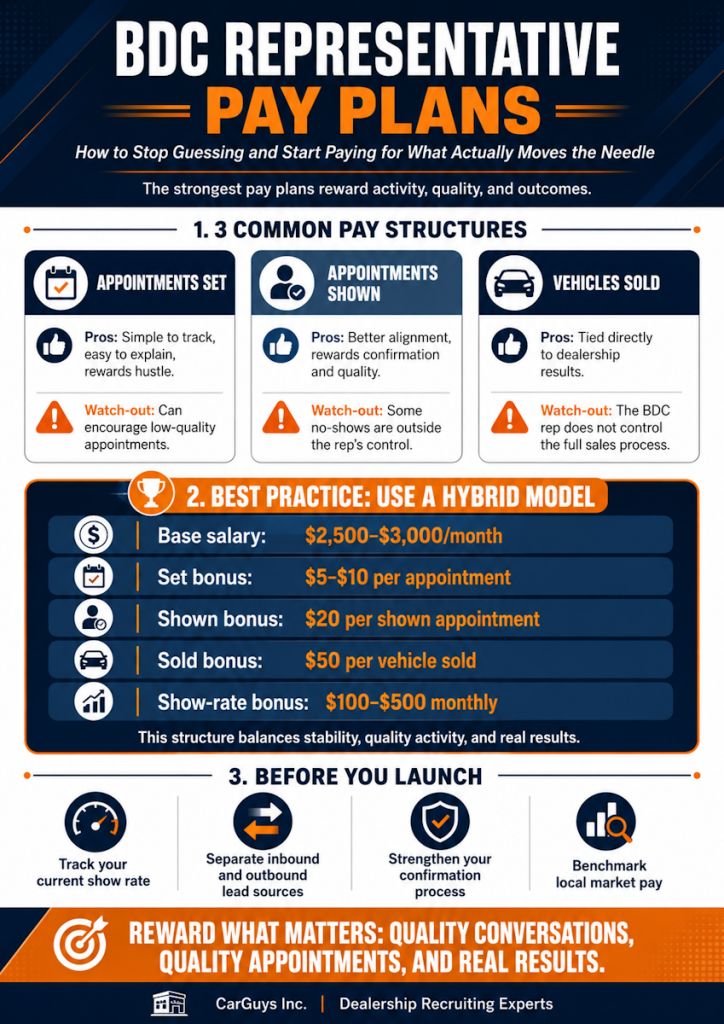
The Three Most Common BDC Pay Structures – and Their Trade-offs
1. Pay on Appointments Set
What it looks like: A flat bonus of $5–$15 per appointment set, often with a tiered structure (e.g., 40 sets = $8 each; 60+ sets = $12 each).
The upside: Simple to track, easy to explain, and motivating for reps who thrive on daily activity metrics. It rewards hustle and volume.
The downside: It creates the wrong incentive. When reps are paid purely on sets, they’ll book anyone who says yes – including low-intent shoppers who never intended to visit. Show rates collapse. Your sales team grows resentful. And the appointments that do come through are often lower quality than if you had a more selective process.
This structure works best as part of a pay plan, not as the whole foundation.
2. Pay on Appointments Shown
What it looks like: A higher per-appointment bonus ($20–$40) paid only when the customer arrives at the dealership.
The upside: Better alignment between BDC activity and real sales opportunity. Your reps are now incentivized to confirm, follow up, and set higher-quality appointments rather than just booking bodies.
The downside: Reps still have some factors outside their control – a customer’s schedule changes, they go to a competitor, or they simply ghost. A string of bad luck no-shows can tank a rep’s paycheck despite solid effort. Over time, this breeds anxiety and turnover, especially among newer reps who haven’t built confirmation habits yet.
Show-based pay works well when your BDC has strong confirmation scripts, a manager reinforcing the process, and show rates above 60%.
3. Pay on Vehicles Sold
What it looks like: A per-unit bonus ($50–$150) for each vehicle sold that originated from a BDC appointment.
The upside: Maximum alignment with dealership profitability. Every dollar paid out is directly tied to revenue generated.
The downside: The BDC rep has almost no control over whether a deal closes. A customer may show up, spend three hours on the floor, and walk away because the desk couldn’t make the numbers work or the salesperson had an off day. Paying entirely on sold units makes your BDC feel like a second-tier sales team without the control or commission structure to match.
This model drives away your strongest BDC talent – the people who are genuinely excellent at phone skills and relationship-building but don’t want to be tied to variables they can’t manage.
The Hybrid Model: What Most High-Performing BDCs Actually Use
The most effective BDC pay plans don’t pick a single metric – they build a structure that rewards activity, quality, and outcomes in proportion. Here’s how a practical hybrid pay plan might look:
Sample BDC / Internet Sales Rep Pay Plan
Base Salary: $2,500 – $3,000/month
(Provides stability, reduces turnover, attracts candidates who value consistency)
Appointments Set Bonus:
- 1–30 sets: $5 per appointment
- 31–50 sets: $7 per appointment
- 51+ sets: $10 per appointment
Appointments Shown Bonus:
- $20 per shown appointment
- (Only triggers when customer physically arrives; encourages quality over quantity)
Sold Unit Bonus:
- $50 per vehicle sold from a BDC-sourced appointment
- (Ties rep performance to dealership outcome without making it the primary driver)
Monthly Performance Bonus (Tiered):
| Below 50% | $0 |
| 50% – 59% | $100 |
| 60% – 69% | $250 |
| 70%+ | $500 |
Total Earning Potential Example:
A rep who sets 55 appointments, shows 38 (69% show rate), and converts 12 sales in a month could earn:
- Base: $2,750
- Set Bonus: (30 x $7) + (25 x $10) = $210 + $250 = $460
- Shown Bonus: 38 x $20 = $760
- Sold Bonus: 12 x $50 = $600
- Show Rate Bonus: $250
- Total: approximately $4,820
This structure pays your best reps competitively, rewards quality activity, and creates shared skin in the game without making reps feel like they’re carrying the entire sales team on their backs.
Key Factors to Calibrate Before You Launch Any Pay Plan
Before rolling out a new BDC compensation structure, make sure you’ve answered these questions:
What is your current show rate? If you don’t know this number, you don’t have enough data to build a fair pay plan. Track it for 30 days before making changes.
How are appointments sourced? Internet leads, phone ups, and outbound calls each have different conversion rates. A rep working primarily cold outbound should not be measured the same way as one handling warm inbound leads.
How long is your appointment confirmation window? If your team confirms 24 hours out and that’s it, your show rate will suffer regardless of pay structure. Build the process first; then build the pay plan around it.
What’s the market rate in your area? BDC pay varies significantly by region. In high-cost-of-living markets, a $2,500 base may not attract quality candidates. Know what competitors are paying before you set your floor.
The Retention Problem Nobody Talks About
One reason dealerships struggle to find and keep good BDC talent isn’t the pay plan itself – it’s the inconsistency. Nothing burns out a BDC rep faster than a pay plan that changes every quarter, or one that looked great on paper but produces wildly inconsistent paychecks.
How to Reduce Employee Turnover in Auto Dealerships
When reps can’t predict their income, they disengage. They stop setting aggressive goals because they don’t trust the math. The most successful BDC departments have pay plans that have been stable for at least six months, with incremental adjustments tied to clear performance data – not management gut feelings.
The Role of Pay Plans in Reducing Turnover
If you’re rebuilding your BDC pay plan from scratch, communicate the new structure clearly, give reps at least one full month to test their earning potential before evaluating, and make adjustments based on actual data rather than anecdote.
A Note on Internet Sales Manager Pay Plans
If your BDC has a dedicated Internet Sales Manager overseeing the team, their pay plan should layer in leadership accountability: team show rate targets, overall appointment-to-sold conversion, and individual rep development metrics. Paying a manager only on their own sets misaligns their focus entirely.
How to Evaluate Internet Sales Manager Job Offers
A strong Internet Sales Manager pay plan typically includes a higher base salary ($4,000 – $5,500/month), team performance bonuses tied to department show rate and sold units, and a small override on each unit sold by the BDC team.
Build the Structure Around the Role, Not Around What’s Easiest to Track
The biggest mistake dealerships make isn’t choosing the wrong metric – it’s designing the pay plan around what’s easiest for management to track rather than what accurately reflects the BDC rep’s contribution. Sets are easy to count. Shown appointments take a little more tracking. Sold units require clean attribution.
Do the tracking work. Build the infrastructure to measure accurately. Then build a pay plan that rewards what actually matters: quality conversations that turn into quality appointments, with clients who show up ready to buy.
Your BDC is often the first human contact a customer has with your dealership. Pay them like it.
CarGuys Inc. is an automotive recruiting agency built exclusively for the car business. From technicians and service advisors to salespeople and managers, we connect dealerships and repair shops with qualified talent faster, using nationwide reach and years of hands-on experience.


With over 700 clients and thousands of hires, we don’t just fill positions; we help build stronger teams that foster long-term success.