The Shift Happening in Automotive Careers
Automotive careers are evolving, but not through sudden disruption. Instead, the industry is steadily moving toward vehicles that rely more on electronics, software, and diagnostics. This shift started long before electric vehicles entered the mainstream, but EV adoption has accelerated it.
Connected cars, both gas and hybrid, vehicles already depend heavily on sensors, control modules, driver assistance systems, and complex wiring networks. As a result, the role of the automotive technician is changing. Mechanical skills still matter, but electrical knowledge and diagnostic ability are becoming just as important.
For anyone exploring EV technician careers or considering a move into automotive electronics, this shift represents opportunity rather than replacement.
What an EV and Electronics Technician Actually Does
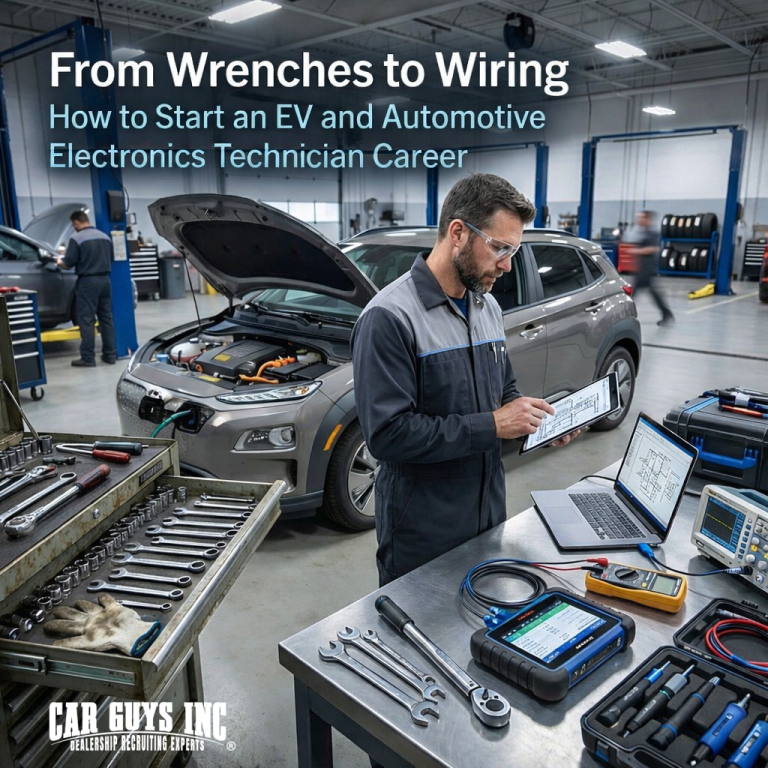
An EV and electronics technician focuses on diagnosing and supporting vehicle systems rather than routine mechanical repair. The work remains hands-on, but it relies more on analysis, testing, and system-level understanding.
Common responsibilities include:
- Safely working with high-voltage EV systems
- Diagnosing battery health, charging issues, and power delivery
- Troubleshooting electrical faults using wiring diagrams and scan tools
- Interpreting fault codes and live vehicle data
- Testing sensors, modules, and vehicle communication networks
- Performing software updates and module programming
- Supporting ADAS systems such as cameras, radar, and sensor calibration
Instead of replacing parts based on symptoms, EV and electronics technicians identify root causes. The role rewards patience, logic, and attention to detail.
How EV and Electronics Technician Roles Differ From Traditional Automotive Technician Jobs
The difference between traditional automotive technician jobs and EV or automotive electronics technician jobs is not the vehicle itself. The real difference is how problems are approached and solved.
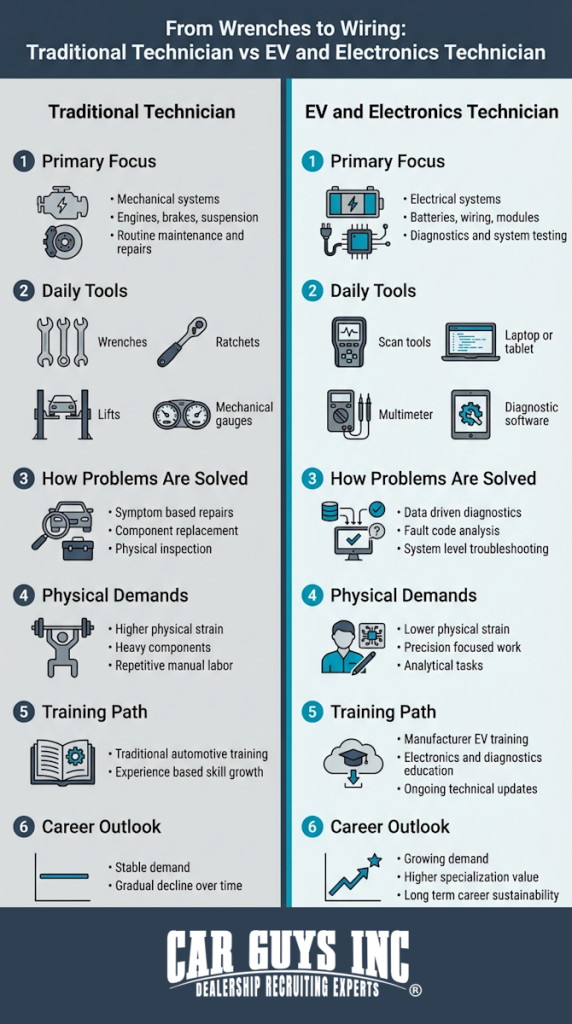
Traditional Technician vs EV and Electronics Technician
| Category | Traditional Automotive Technician | EV and Electronics Technician |
| Primary Focus | Mechanical systems and maintenance | Electrical systems and diagnostics |
| Common Tasks | Brakes, suspension, engines, transmissions | Battery systems, wiring, modules, software |
| Tools Used | Hand tools, lifts, mechanical gauges | Scan tools, multimeters, laptops, insulation gear |
| Physical Demand | Higher physical strain | Lower physical strain overall |
| Diagnostic Approach | Symptom-based and component replacement | Data-driven troubleshooting |
| Learning Curve | Familiar systems with incremental updates | Rapid technology updates |
| Long-Term Outlook | Stable but gradually declining demand | Growing demand across dealerships and repair shops |
This comparison does not suggest one path is better than the other. It highlights how electronics-focused technicians are becoming more valuable as vehicles grow more complex.
Who EV and Electronics Technician Careers Are Best Suited For
EV and automotive electronics roles tend to attract people who enjoy understanding systems and solving problems.
This career path is well suited for:
- Technicians who prefer diagnostics over repetitive mechanical repairs
- Individuals who enjoy electrical troubleshooting and data analysis
- Entry-level candidates with electronics, IT, or technical education
- Career changers looking for skilled work with less physical strain
- Experienced technicians seeking long-term career sustainability
You do not need to be a computer expert. Curiosity and willingness to learn matter far more.
Skills That Transfer From Gas and Diesel Vehicles
One common concern about EV technician careers is the belief that existing skills do not apply. In reality, many fundamentals transfer directly.
Transferable skills include:
- Electrical fundamentals and circuit understanding
- Reading wiring diagrams and schematics
- Logical diagnostic processes
- Scan tool familiarity
- Vehicle communication systems knowledge
- Clear documentation and customer communication
If you already diagnose electrical issues on modern vehicles, you are closer to EV and electronics work than you may realize.
New Skills EV and Electronics Technicians Need to Learn
While many skills carry over, EV and electronics technicians must develop additional competencies through training and experience.
Key learning areas include:
- High-voltage safety procedures and personal protective equipment
- EV battery architecture and battery management systems
- Inverters, converters, and charging system diagnostics
- Advanced scan tool interpretation
- Software updates and module programming
- ADAS fundamentals and calibration processes
Most technicians learn these skills incrementally through structured training and hands-on exposure.
Training and Education Paths for EV and Electronics Technicians
There is no single required path into EV or automotive electronics technician roles. Multiple entry points exist depending on background and employer.
Common training routes include:
- Manufacturer training programs at dealerships
- Community college automotive electronics programs
- Trade schools offering EV-focused coursework
- Online learning paired with shop experience
- Internal training within dealership groups
Dealerships often prioritize manufacturer training, while independent shops value strong diagnostic fundamentals and adaptability.
Entry-Level vs Specialized EV and Electronics Technician Roles
EV and electronics technician careers cover a wide range of responsibilities.
Entry-level roles may include:
- EV maintenance technician
- Electrical apprentice or assistant technician
- Diagnostic support technician
More specialized positions include:
- EV diagnostic specialist
- ADAS calibration technician
- Battery and electric powertrain specialist
- Mobile diagnostics technician
Many technicians start in broad roles and specialize over time as their skills develop.
Pay Outlook and Long-Term Career Growth
Automotive electronics and EV diagnostic skills are increasingly difficult to find, which directly affects compensation and advancement opportunities.
Across many markets:
- Entry-level EV technician roles are competitive with traditional positions
- Specialized electronics and diagnostics roles command higher pay
- Electronics-focused technicians often advance faster
- Long-term job stability is stronger as vehicle technology continues evolving
While pay varies by location and employer, the demand trend remains consistently upward.
Common Myths About EV and Automotive Electronics Careers
Several misconceptions discourage people from pursuing EV technician careers.
- An engineering degree is not required
- EV work is not purely software-based
- Gas-powered vehicles are not disappearing overnight
- Age is not a barrier to learning electronics
- Employers are actively willing to train motivated technicians
Most successful EV and electronics technicians began as general automotive techs.
How to Get Started in an EV or Electronics Technician Career
Getting started does not require an immediate career overhaul.
Practical first steps include:
- Strengthening electrical fundamentals
- Becoming comfortable with scan tool data and diagnostics
- Seeking entry-level diagnostic exposure
- Completing basic EV safety training
- Positioning your resume around problem-solving skills
- In many hiring decisions, trainability and mindset outweigh existing certifications.
The Bottom Line
The transition from wrenches to wiring is not about leaving traditional automotive skills behind. It is about building on them.
As vehicles continue to rely more heavily on electronics, technicians who can diagnose systems, interpret data, and adapt to new technology will remain in demand. EV and automotive electronics technician careers offer a path that values thinking, curiosity, and continuous learning, qualities that define long-term success in the modern automotive industry.
CarGuys Inc. is an automotive technician recruitment agency built exclusively for the car business. From technicians and service advisors to salespeople and managers, we connect dealerships and repair shops with qualified talent faster, using AI-powered tools, nationwide reach, and years of hands-on experience.
With over 700 clients and thousands of hires, we don’t just fill positions;
we help build stronger teams that drive long-term success.